Interstate Batteries Delivery & Operations Suite
Imagine trying to run a busy delivery business with tools that belong in a museum. That was the daily struggle for dealers at Interstate Batteries. They were using an outdated, clunky desktop application to manage everything from deliveries and inventory to coordinating their drivers. This old system was a huge bottleneck. It completely lacked real-time visibility, meaning dealers couldn't see what was happening out in the field. There were no live updates, and it was incredibly inflexible for handling the increasing demand and growing number of deliveries. Simply put, it couldn't keep up, leading to frustration and inefficiency.
Role
Product Designer and Strategist
year
2025
Tags
B2C, User Research, Business Strategy, Design
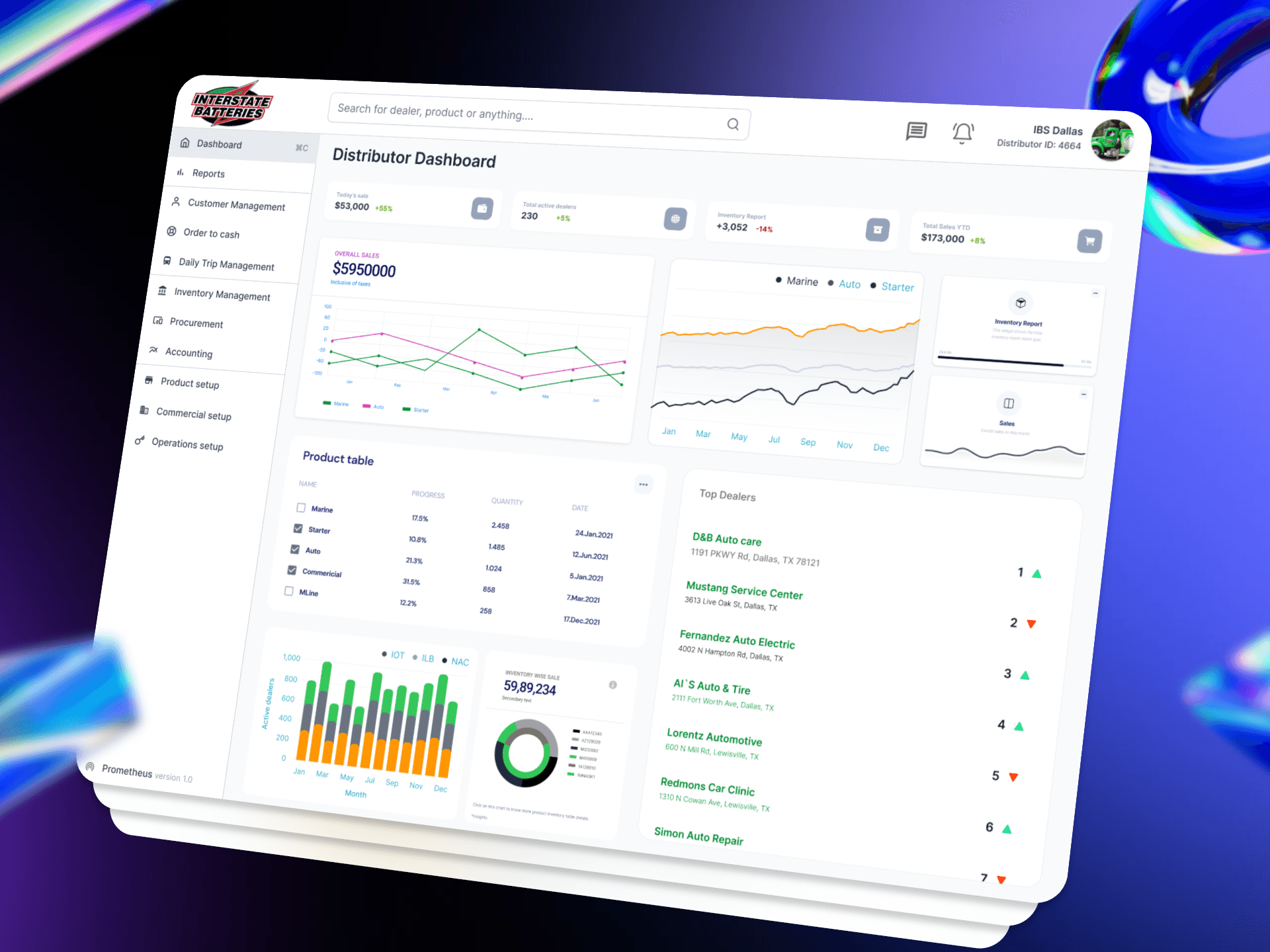
Overview
The Daily Headaches
The problems weren't just theoretical; they impacted everyone involved:
For the Dealers:
No clear overview: They couldn't easily see daily delivery schedules or driver routes.
Blind spots on deliveries: It was impossible to monitor delivery status in real-time.
Constant manual work: Communication with drivers and the warehouse was all done manually.
Inventory chaos: No easy way to track stock or see end-of-day counts.
Lack of visibility: No clear picture of what was delivered, pending, or facing issues.
For the Drivers:
No mobile tools: They lacked a way to track trips or delivery checklists on the go.
Unstructured reporting: No easy or consistent way to report delivery status or issues from the road.
Disconnected: No direct messaging or communication with the dealer.
Under pressure: They still needed to complete all assigned deliveries within an 8-hour shift, despite the old tools.
What are solutions that we landed upon for the above
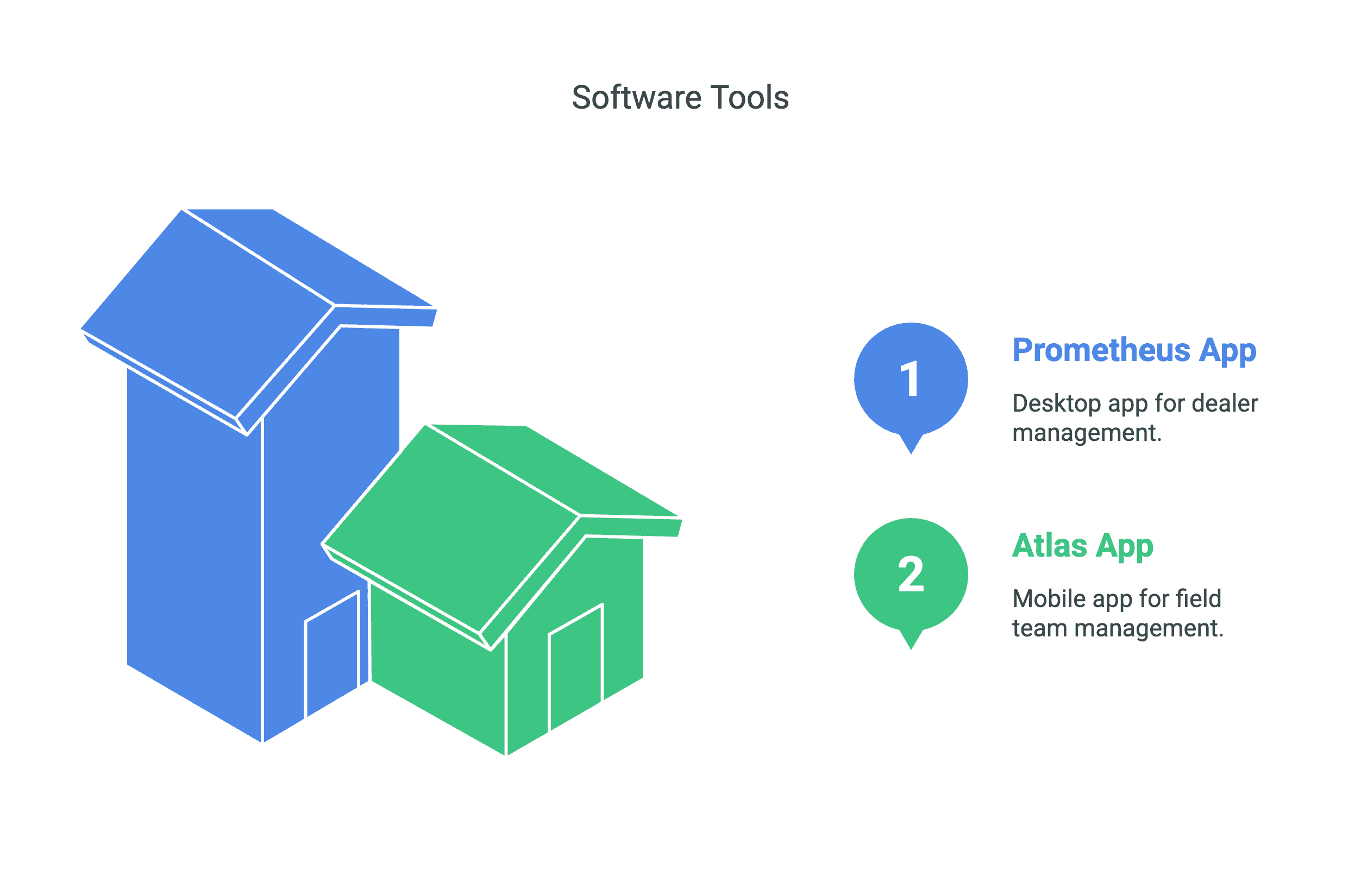
My Approach
🔍 My Design Journey: From Problem to Prototype
As the designer, my process was all about understanding the human problem and building intuitive solutions:
1. Understanding the Problem
I started by diving deep into the existing situation. I reviewed problem statements from the business, poured over research documents from interviews with dealers and field teams, and observed how deliveries were actually scheduled and tracked. Then, I collaborated closely with the Project Manager/Product Owner to fully grasp the business expectations and map out every step of the daily operations, identifying all the pain points.
2. Mapping Dealer & Driver Workflows
To get a clear picture, I broke down the entire workflow by focusing on three main user types:
Dealer: The planner and manager of deliveries, inventory, and communications.
Warehouse Worker: Responsible for loading batteries onto trucks for specific trips.
Driver: Follows routes, completes deliveries, and reports status from the field.
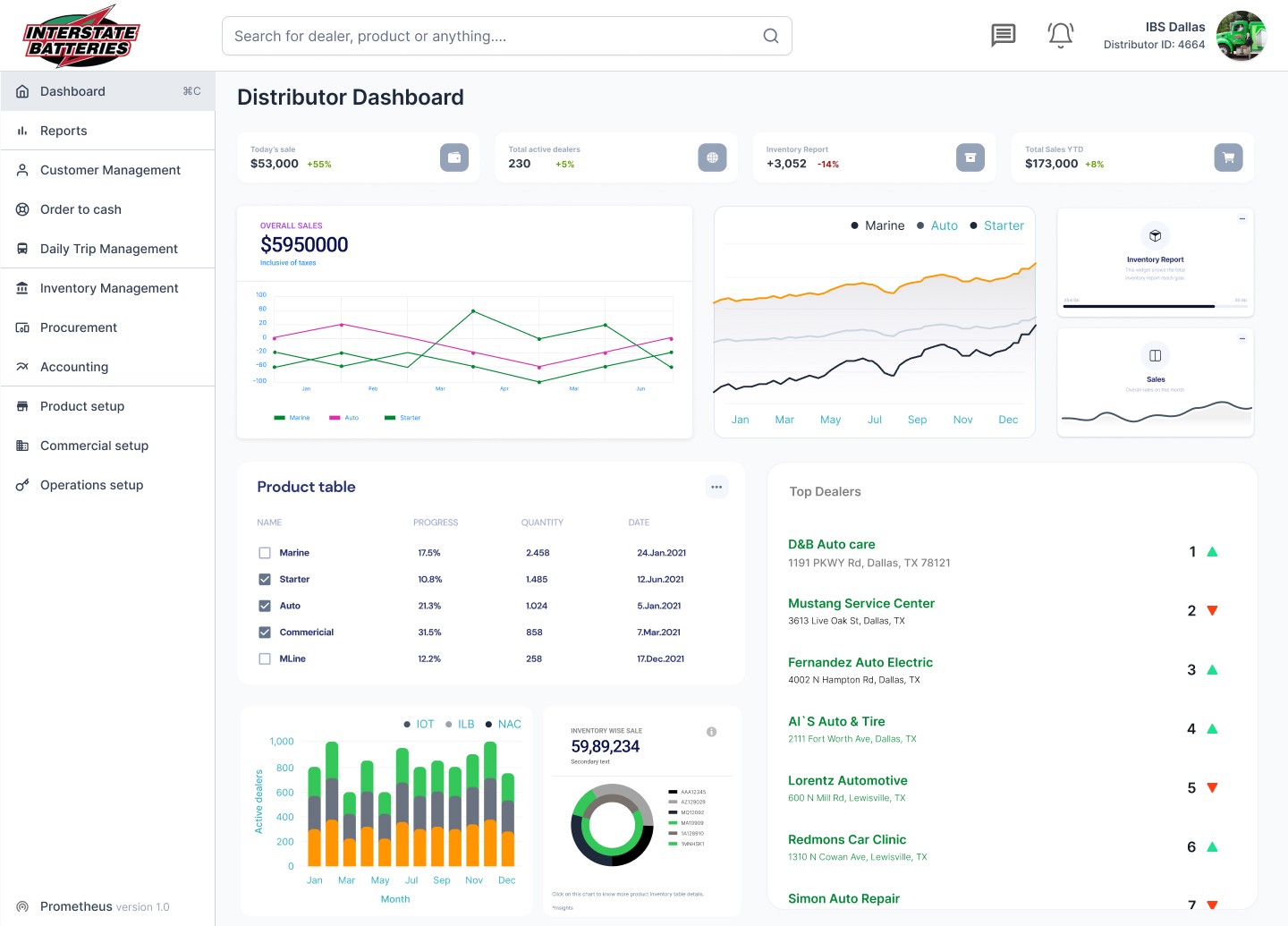
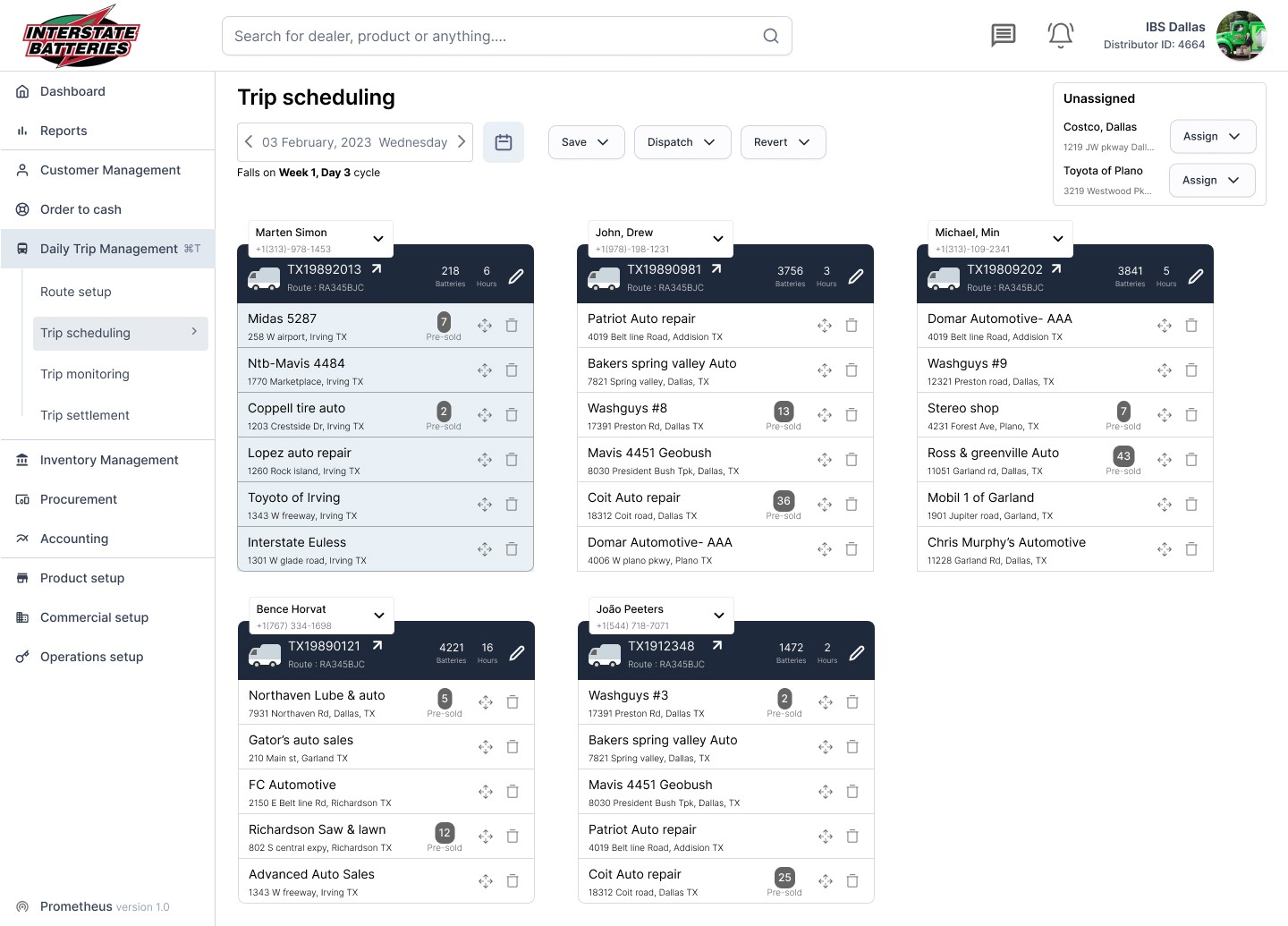
This detailed mapping helped us define core user journeys like scheduling trips, tracking progress, managing inventory, and keeping everyone connected.
3. Designing Low-Fidelity Wireframes
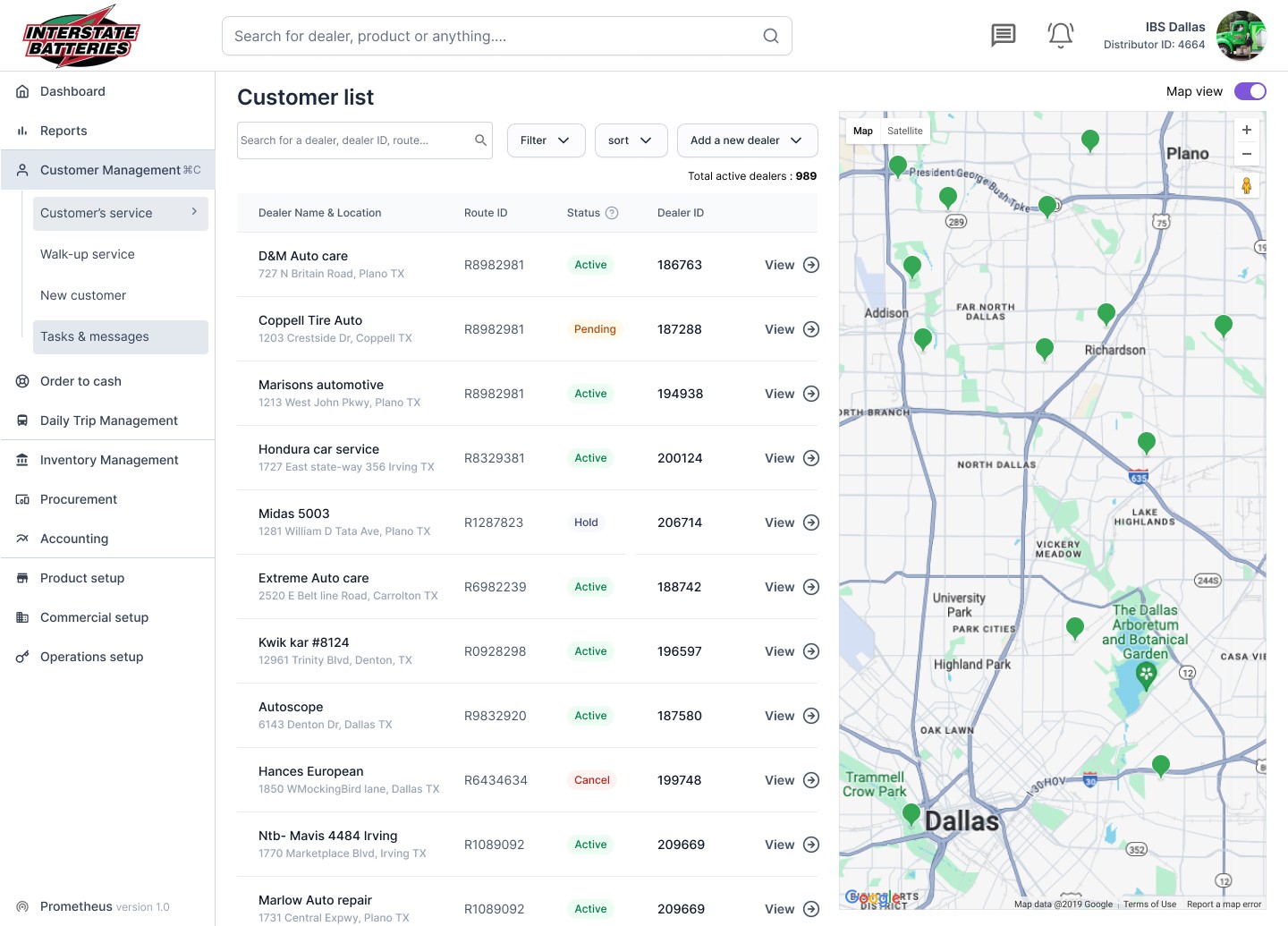
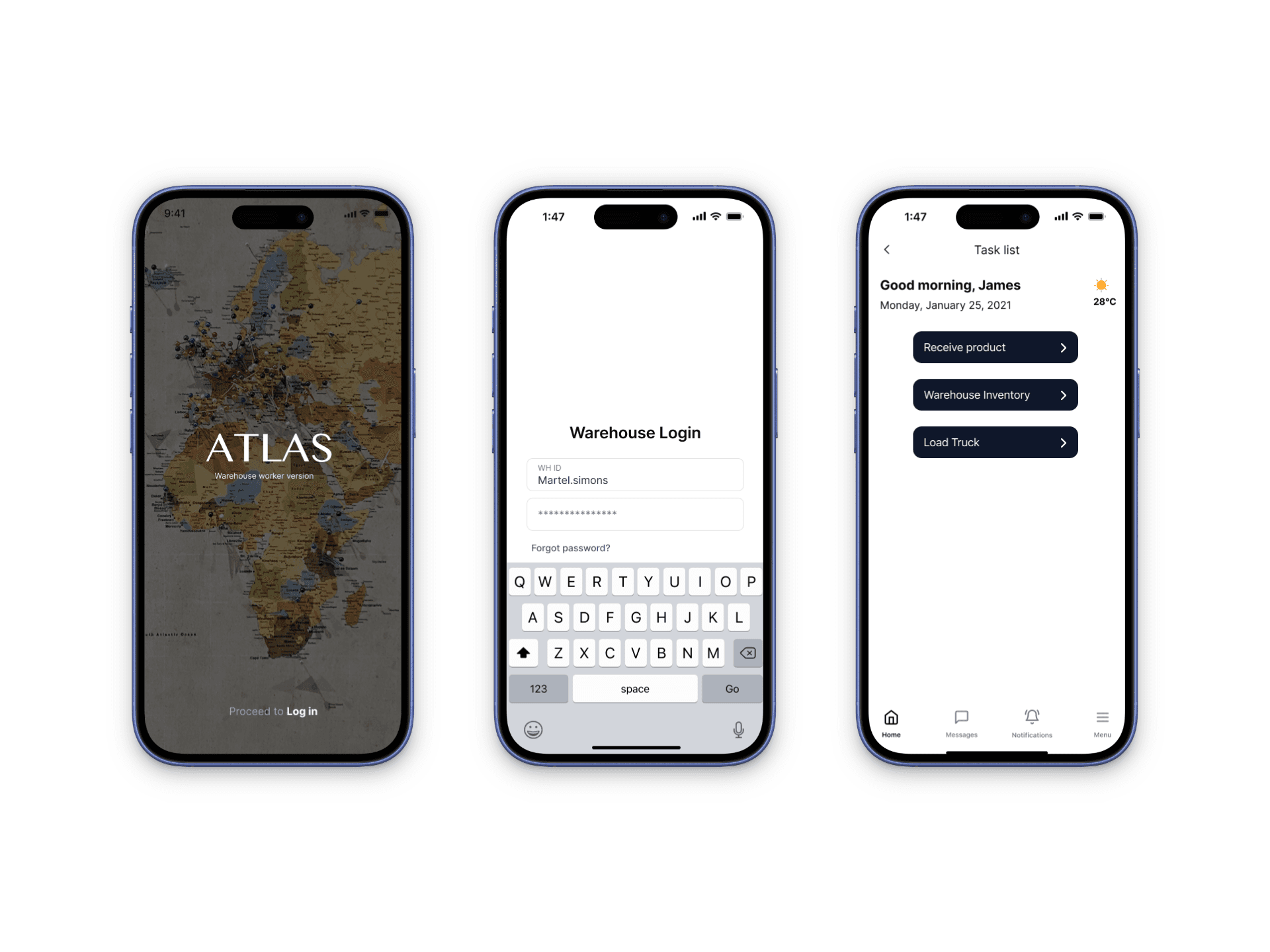
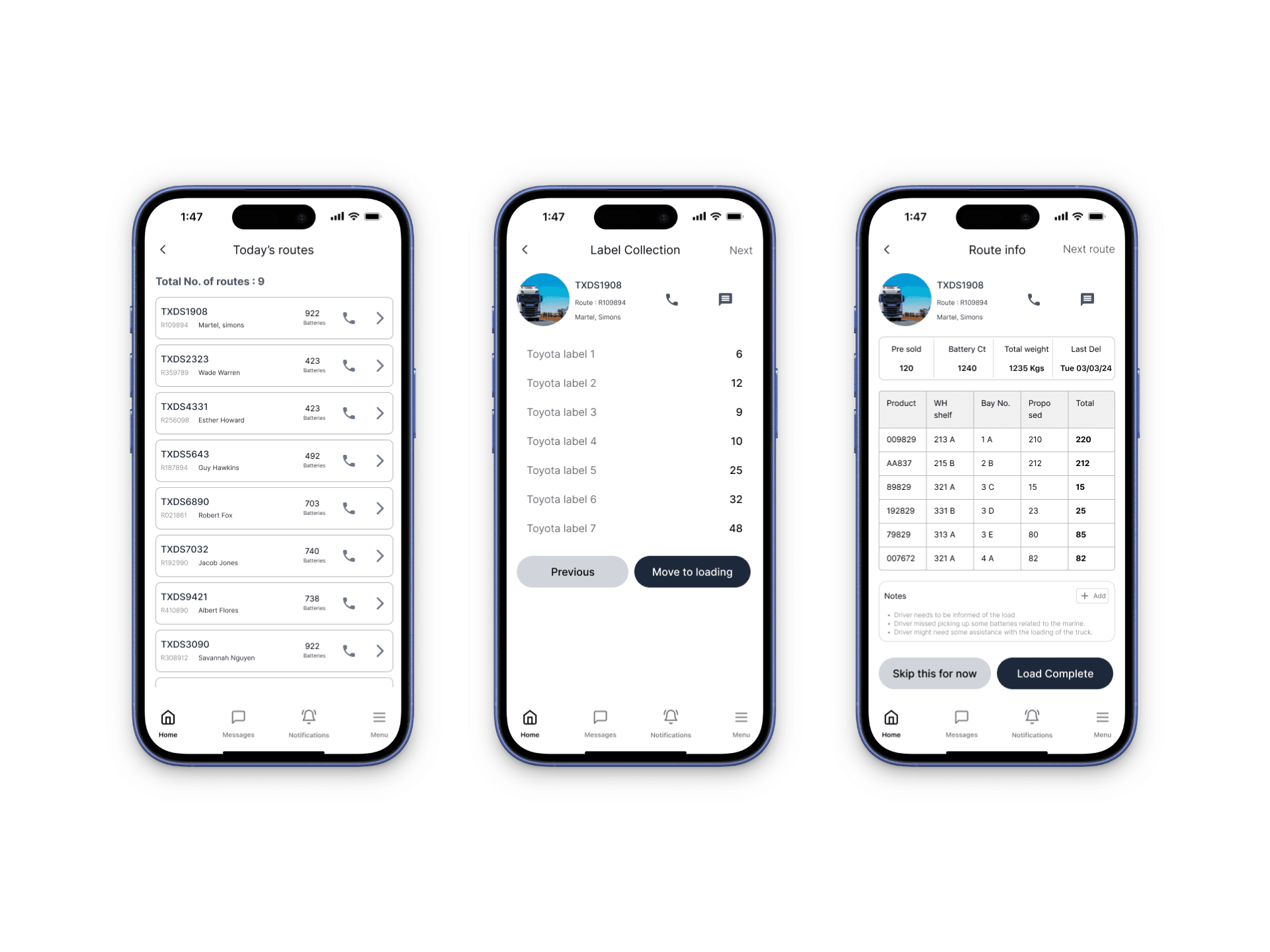
Once the core flows were clear, I started sketching. I created low-fidelity wireframes for both Prometheus and Atlas, focusing on the structure of key screens like dashboards, schedulers, and messaging. I then built a simple prototype to walk stakeholders through the entire system, end-to-end.
4. Validating with Stakeholders
Using that prototype, I presented our ideas to business stakeholders to gather their feedback. This allowed us to adjust the flows based on usability, operational efficiency, and technical feasibility, ensuring the entire team could visualize the complete solution and plan the next steps.
Results & Impact
🔚 The Outcome: A Path to Modernization
The concept and direction of Prometheus and Atlas were incredibly well-received by both business stakeholders and the actual dealers. The prototypes and walkthroughs helped everyone clearly see how this new system could transform their operations:
Improved Visibility: Clearer tracking of deliveries and warehouse operations, estimated to save 1.5 hours per day.
Reduced Manual Work: Replaced time-consuming manual processes with a faster, more efficient digital system.
Real-Time Communication: Connected drivers and dealers with instant updates and improved field collaboration.
As a result:
The project received funding and support for further development, moving it past the conceptual stage.
Dealers were genuinely excited about moving to a modern, browser-based platform.
The system design successfully aligned technology and business teams for the next crucial phase.
To ensure a smooth transition, we also made a smart choice to reuse existing elements like profile data and some native system modules. Our goal wasn't to completely reinvent the wheel, but to strategically improve where it mattered most, making adoption easy for existing users. This project truly set Interstate Batteries on a path towards a more efficient and modern future for their delivery operations.
Interstate Batteries Delivery & Operations Suite
Imagine trying to run a busy delivery business with tools that belong in a museum. That was the daily struggle for dealers at Interstate Batteries. They were using an outdated, clunky desktop application to manage everything from deliveries and inventory to coordinating their drivers. This old system was a huge bottleneck. It completely lacked real-time visibility, meaning dealers couldn't see what was happening out in the field. There were no live updates, and it was incredibly inflexible for handling the increasing demand and growing number of deliveries. Simply put, it couldn't keep up, leading to frustration and inefficiency.
Role
Product Designer and Strategist
year
2025
Tags
B2C, User Research, Business Strategy, Design
Overview
The Daily Headaches
The problems weren't just theoretical; they impacted everyone involved:
For the Dealers:
No clear overview: They couldn't easily see daily delivery schedules or driver routes.
Blind spots on deliveries: It was impossible to monitor delivery status in real-time.
Constant manual work: Communication with drivers and the warehouse was all done manually.
Inventory chaos: No easy way to track stock or see end-of-day counts.
Lack of visibility: No clear picture of what was delivered, pending, or facing issues.
For the Drivers:
No mobile tools: They lacked a way to track trips or delivery checklists on the go.
Unstructured reporting: No easy or consistent way to report delivery status or issues from the road.
Disconnected: No direct messaging or communication with the dealer.
Under pressure: They still needed to complete all assigned deliveries within an 8-hour shift, despite the old tools.
What are solutions that we landed upon for the above
My Approach
🔍 My Design Journey: From Problem to Prototype
As the designer, my process was all about understanding the human problem and building intuitive solutions:
1. Understanding the Problem
I started by diving deep into the existing situation. I reviewed problem statements from the business, poured over research documents from interviews with dealers and field teams, and observed how deliveries were actually scheduled and tracked. Then, I collaborated closely with the Project Manager/Product Owner to fully grasp the business expectations and map out every step of the daily operations, identifying all the pain points.
2. Mapping Dealer & Driver Workflows
To get a clear picture, I broke down the entire workflow by focusing on three main user types:
Dealer: The planner and manager of deliveries, inventory, and communications.
Warehouse Worker: Responsible for loading batteries onto trucks for specific trips.
Driver: Follows routes, completes deliveries, and reports status from the field.
This detailed mapping helped us define core user journeys like scheduling trips, tracking progress, managing inventory, and keeping everyone connected.
3. Designing Low-Fidelity Wireframes
Once the core flows were clear, I started sketching. I created low-fidelity wireframes for both Prometheus and Atlas, focusing on the structure of key screens like dashboards, schedulers, and messaging. I then built a simple prototype to walk stakeholders through the entire system, end-to-end.
4. Validating with Stakeholders
Using that prototype, I presented our ideas to business stakeholders to gather their feedback. This allowed us to adjust the flows based on usability, operational efficiency, and technical feasibility, ensuring the entire team could visualize the complete solution and plan the next steps.
Results & Impact
🔚 The Outcome: A Path to Modernization
The concept and direction of Prometheus and Atlas were incredibly well-received by both business stakeholders and the actual dealers. The prototypes and walkthroughs helped everyone clearly see how this new system could transform their operations:
Improved Visibility: Clearer tracking of deliveries and warehouse operations, estimated to save 1.5 hours per day.
Reduced Manual Work: Replaced time-consuming manual processes with a faster, more efficient digital system.
Real-Time Communication: Connected drivers and dealers with instant updates and improved field collaboration.
As a result:
The project received funding and support for further development, moving it past the conceptual stage.
Dealers were genuinely excited about moving to a modern, browser-based platform.
The system design successfully aligned technology and business teams for the next crucial phase.
To ensure a smooth transition, we also made a smart choice to reuse existing elements like profile data and some native system modules. Our goal wasn't to completely reinvent the wheel, but to strategically improve where it mattered most, making adoption easy for existing users. This project truly set Interstate Batteries on a path towards a more efficient and modern future for their delivery operations.
Interstate Batteries Delivery & Operations Suite
Imagine trying to run a busy delivery business with tools that belong in a museum. That was the daily struggle for dealers at Interstate Batteries. They were using an outdated, clunky desktop application to manage everything from deliveries and inventory to coordinating their drivers. This old system was a huge bottleneck. It completely lacked real-time visibility, meaning dealers couldn't see what was happening out in the field. There were no live updates, and it was incredibly inflexible for handling the increasing demand and growing number of deliveries. Simply put, it couldn't keep up, leading to frustration and inefficiency.
Role
Product Designer and Strategist
year
2025
Tags
B2C, User Research, Business Strategy, Design
Overview
The Daily Headaches
The problems weren't just theoretical; they impacted everyone involved:
For the Dealers:
No clear overview: They couldn't easily see daily delivery schedules or driver routes.
Blind spots on deliveries: It was impossible to monitor delivery status in real-time.
Constant manual work: Communication with drivers and the warehouse was all done manually.
Inventory chaos: No easy way to track stock or see end-of-day counts.
Lack of visibility: No clear picture of what was delivered, pending, or facing issues.
For the Drivers:
No mobile tools: They lacked a way to track trips or delivery checklists on the go.
Unstructured reporting: No easy or consistent way to report delivery status or issues from the road.
Disconnected: No direct messaging or communication with the dealer.
Under pressure: They still needed to complete all assigned deliveries within an 8-hour shift, despite the old tools.
What are solutions that we landed upon for the above
My Approach
🔍 My Design Journey: From Problem to Prototype
As the designer, my process was all about understanding the human problem and building intuitive solutions:
1. Understanding the Problem
I started by diving deep into the existing situation. I reviewed problem statements from the business, poured over research documents from interviews with dealers and field teams, and observed how deliveries were actually scheduled and tracked. Then, I collaborated closely with the Project Manager/Product Owner to fully grasp the business expectations and map out every step of the daily operations, identifying all the pain points.
2. Mapping Dealer & Driver Workflows
To get a clear picture, I broke down the entire workflow by focusing on three main user types:
Dealer: The planner and manager of deliveries, inventory, and communications.
Warehouse Worker: Responsible for loading batteries onto trucks for specific trips.
Driver: Follows routes, completes deliveries, and reports status from the field.
This detailed mapping helped us define core user journeys like scheduling trips, tracking progress, managing inventory, and keeping everyone connected.
3. Designing Low-Fidelity Wireframes
Once the core flows were clear, I started sketching. I created low-fidelity wireframes for both Prometheus and Atlas, focusing on the structure of key screens like dashboards, schedulers, and messaging. I then built a simple prototype to walk stakeholders through the entire system, end-to-end.
4. Validating with Stakeholders
Using that prototype, I presented our ideas to business stakeholders to gather their feedback. This allowed us to adjust the flows based on usability, operational efficiency, and technical feasibility, ensuring the entire team could visualize the complete solution and plan the next steps.
Results & Impact
🔚 The Outcome: A Path to Modernization
The concept and direction of Prometheus and Atlas were incredibly well-received by both business stakeholders and the actual dealers. The prototypes and walkthroughs helped everyone clearly see how this new system could transform their operations:
Improved Visibility: Clearer tracking of deliveries and warehouse operations, estimated to save 1.5 hours per day.
Reduced Manual Work: Replaced time-consuming manual processes with a faster, more efficient digital system.
Real-Time Communication: Connected drivers and dealers with instant updates and improved field collaboration.
As a result:
The project received funding and support for further development, moving it past the conceptual stage.
Dealers were genuinely excited about moving to a modern, browser-based platform.
The system design successfully aligned technology and business teams for the next crucial phase.
To ensure a smooth transition, we also made a smart choice to reuse existing elements like profile data and some native system modules. Our goal wasn't to completely reinvent the wheel, but to strategically improve where it mattered most, making adoption easy for existing users. This project truly set Interstate Batteries on a path towards a more efficient and modern future for their delivery operations.